
Author: Matteo Matera
Reviewer: Tommaso T. Bartolozzi
Trade relations: a disrupted partnership
Commercial ties between Italy and Russia have long represented a high-value export channel for Italian industry. Before 2022, Moscow ranked among Italy’s priority markets across several key sectors: industrial machinery (28% of total exports), fashion and luxury (17%), and agri-food (9%). Tourism added further value, peaking in 2019 at 1.7 million arrivals and 5.8 million overnight stays — mostly high-spending visitors. According to Bankitalia, during the summer season alone, Russian HNWI and UHNWI tourists generated around €984 million in direct revenues for the real economy, spanning hospitality, real estate, and premium services.


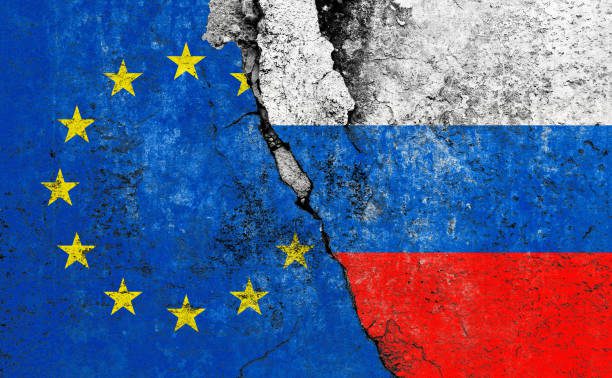
This framework was abruptly disrupted by Russia’s invasion of Ukraine in February 2022. In line with EU policy, Italy joined a series of sanctions targeting Russia’s political, financial, and business elites. According to the European Commission, since 2022 the EU has banned exports worth over €48 billion and imports exceeding €91.2 billion — equivalent to about 54% and 58% of 2021 trade volumes, respectively.
EU measures operated on multiple levels:
-
Financial: exclusion of major Russian banks from SWIFT, restrictions on investment and capital transfers, and limits on access to European financial markets.
-
Commercial: bans on strategic goods and technologies, including semiconductors, energy equipment, and luxury items above €300 — a direct blow to Italy’s strongest export segment.
-
Personal: asset freezes and travel bans against hundreds of individuals tied to the Kremlin.
The impact was immediate. Trade volumes collapsed, and many European firms suspended local operations. For Italy, this meant a sharp contraction in fashion, automotive, and food exports. While economically painful, sanctions were widely interpreted as a political and ethical necessity aimed at curbing Moscow’s financial power and signaling Western unity.
Financial markets: volatility and adaptation
Western sanctions have reverberated across Russia’s financial landscape. The MOEX equity index has remained under pressure throughout 2025, losing over 6% year-to-date and closing September around 2,680 points — well below pre-war levels. Analysts report persistent volatility and an absence of foreign liquidity following the exit of most international investors.
Currency dynamics tell a more nuanced story. After a dramatic fall in 2022, the ruble appreciated nearly 30% against the dollar through 2025, supported by capital controls and extraordinary interventions from the Russian Central Bank. As of September, USD/RUB hovered between 82–85 — its strongest range since 2021. Still, both Reuters and the Bank of Russia warn that this resilience may be temporary. Over the next twelve months, the ruble could weaken toward the 100-per-dollar threshold, reflecting deep structural fragility tied to shrinking energy exports and the cumulative weight of sanctions.
The fashion and luxury sector: navigating compliance and reputation
Among the industries most exposed to sanctions, fashion and luxury remain particularly sensitive. Before the conflict, Russia was a core destination for Italian maisons serving affluent clientele. With the EU ban on luxury goods priced above €300, companies such as Gucci, Prada, Moncler, Armani, and Brunello Cucinelli were forced to suspend direct operations and halt wholesale distribution.
The financial cost was significant, but reputational considerations weighed even more heavily. For brands built on craftsmanship, ethics, and cultural heritage, continuing to operate in Russia risked reputational damage and ESG downgrades — increasingly relevant factors for investors focused on long-term brand value.
Brunello Cucinelli under market scrutiny
In late September 2025, Brunello Cucinelli became the center of market controversy following allegations of sanctions violations — a case that underscored how fragile the balance between business and compliance has become in the current geopolitical environment.
On 26 September 2025, Cucinelli’s stock suffered one of the sharpest drops in its history, falling nearly 20% and erasing more than €1 billion in market capitalization. The trigger was a report by the London-based hedge fund Morpheus Research, accusing the company of bypassing EU sanctions by maintaining indirect sales flows to Russia despite the export ban on luxury goods above €300.
According to Morpheus, Cucinelli items were still available in Moscow via multi-brand boutiques and wholesale partners, despite the closure of mono-brand stores in 2022. The fund claimed to hold photographic evidence, former employee testimony, and inventory data suggesting “anomalous” volumes. Yet the report’s motives were questioned, as Morpheus and other hedge funds — including AQR Capital Management (0.81%), JP Morgan Asset Management UK (0.78%), Kintbury Capital (0.71%), and Pertento Partners (0.72%) — had disclosed significant short positions on the stock, indicating speculative intent.
Market reaction was immediate: the share was repeatedly suspended for excessive volatility and closed the day down 17%. Italy’s market regulator, Consob, requested clarifications from the company regarding potential violations or misleading disclosures.
The management responded firmly, reiterating that all direct operations in Russia had ceased in 2022 and that the market now contributes less than 2% to total revenue. In its October 1 investor communication, Cucinelli acknowledged being “targeted by short selling,” while confirming 2025 guidance: revenue growth around +10%, a stronger EBIT margin, and record investments — about 10.5% of total turnover — aimed at strengthening long-term production capacity.
Beyond the specifics, the episode exposed the luxury sector’s vulnerability to external shocks: geopolitical pressure, speculative trading, and reputational risk. The Cucinelli case illustrates how brand integrity, compliance, and financial resilience are increasingly intertwined.
Macro and geopolitical outlook: shifting centers of gravity
Beyond the corporate dimension, the Cucinelli affair mirrors deeper global realignments. The sanctions intended to weaken Russia have so far failed to isolate it economically. According to recent estimates, Russia’s GDP could exceed $2 trillion by 2030, supported by wage growth (average salary at 90,000 rubles) and ultra-low unemployment near 2% in 2024. These dynamics are sustained not only by war-driven industrial output but also by an eastward reorientation of trade and alliances.

(in billion U.S. dollars)
While the Western bloc faces growing fragmentation — with rising transatlantic tensions, U.S. tariffs, and political divergence — the so-called Eastern front is consolidating. The Beijing parade of September 3 symbolized a renewed unity among nations such as China, India, and Russia, increasingly bound by trade, military, and energy cooperation.
The EU’s strategy of economic isolation thus raises critical questions: has the sanctions regime produced a boomerang effect, eroding Europe’s competitiveness while accelerating the global shift toward Asia? As U.S. fiscal instability and rising debt constrain Washington’s global leverage, emerging powers are steadily assuming economic and political leadership. The result is a redistribution of influence that could leave Europe bearing the heaviest strategic and economic costs.

U.S. dollars)
Final considerations for investors
The Cucinelli case offers a broader reflection on European industry under sanctions. Luxury and manufacturing firms must now operate within a framework where regulatory compliance and geopolitical awareness are as critical as innovation and growth.
Key takeaways:
-
Equity: heightened volatility across luxury stocks; investors should monitor exposure transparency and ESG compliance.
-
FX: short-term ruble stability relies on strict capital controls; medium-term bias remains negative.
-
Macro: sanctions continue to reshape global trade flows, urging investors to reassess supply-chain resilience and regional diversification.
Ultimately, the sustainability of European business models will depend on balancing ethics, regulation, and long-term profitability — a lesson that extends far beyond the borders of the luxury industry.
Leave a Reply